
Louisiana homes need to withstand far more than an afternoon thunderstorm. Tropical storms and hurricanes bring sustained high winds, gusts, wind-driven rain, and flying debris that test every part of a home’s structure. The roof is usually the first thing to fail, and once it does, water damage to everything underneath follows quickly.
That is why we tell clients: we would rather spend more on a properly engineered roof system than on expensive cosmetic upgrades. A beautiful kitchen does not matter much if the roof over it fails in a storm.
Key Takeaways
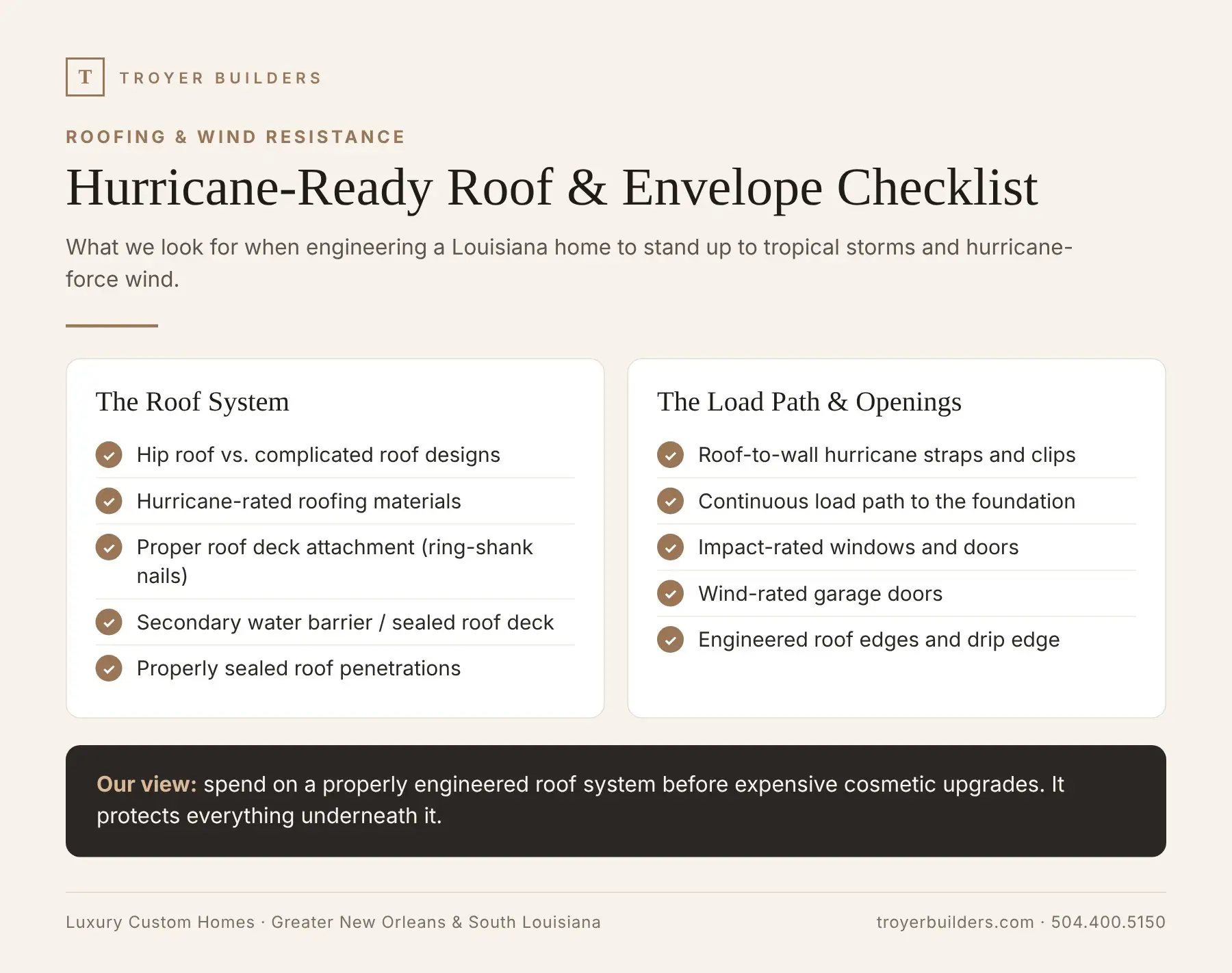
- Simple hip roofs generally perform better in high winds than complicated roof designs with many gables, valleys, and overhangs.
- Use hurricane-rated roofing materials and proper roof decking attachment.
- Roof-to-wall hurricane straps are a critical part of a continuous load path to the foundation.
- Seal the roof deck with a secondary water barrier and properly seal every roof penetration.
- Protect openings with impact-rated windows, doors, and wind-rated garage doors.

Hip Roof vs. Complicated Roof Designs
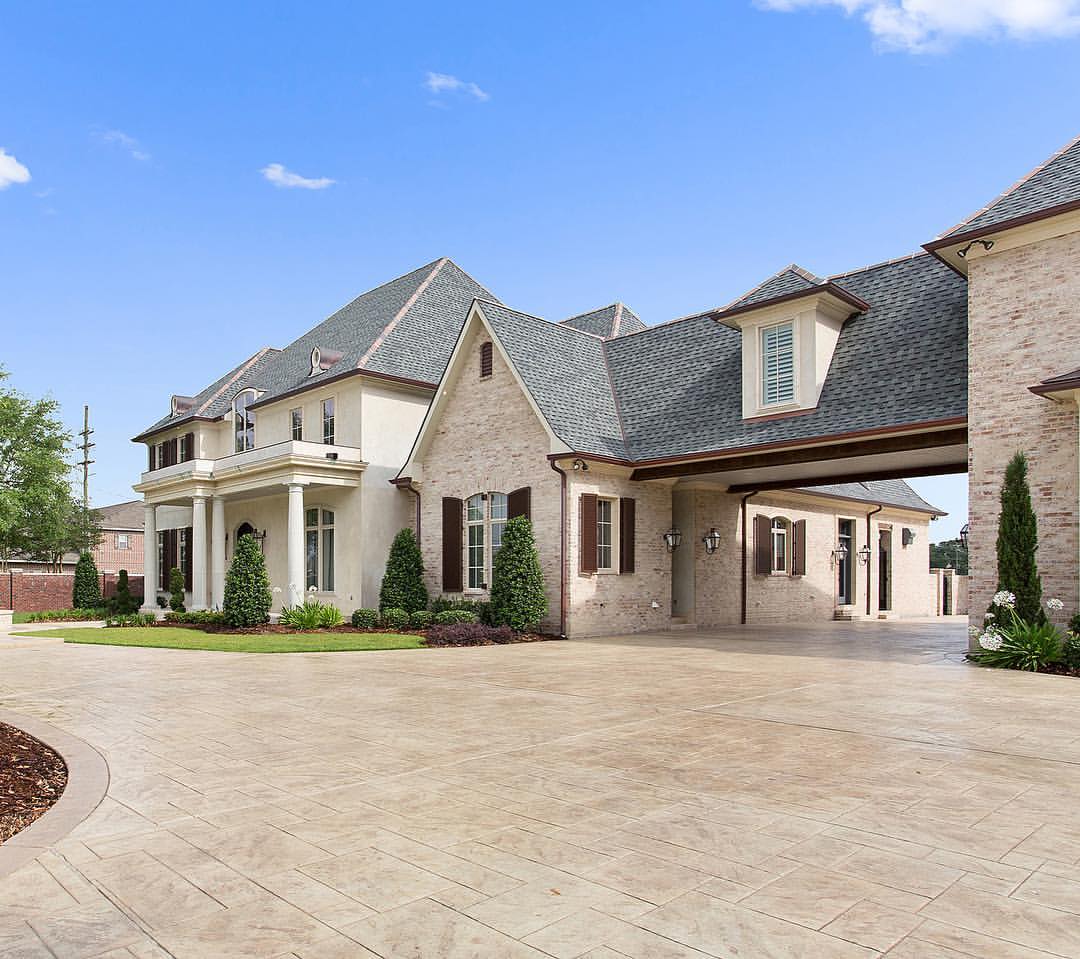
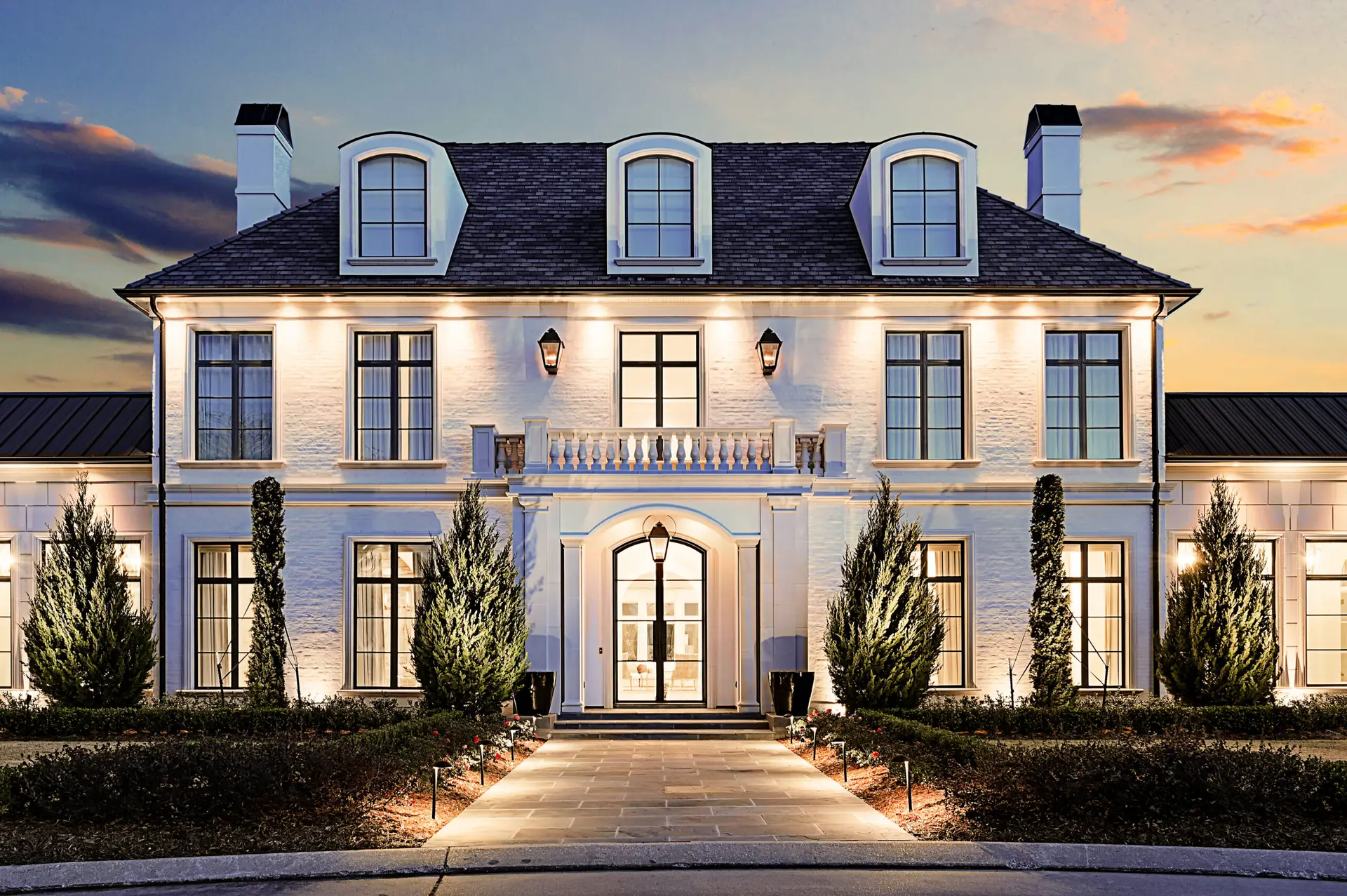
A hip roof slopes down on all four sides, which gives wind fewer flat surfaces to push against and fewer edges to peel up. Large gable ends, deep unsupported overhangs, and complicated roof lines with many intersections create more places for wind pressure to concentrate and more seams for water to enter. That does not mean every home must be a simple box. It means complex roof forms should be engineered intentionally, with extra attention to connections and edges.
What Makes a Roof System Hurricane-Ready
Hurricane-rated roofing materials
Choose shingles, metal, or tile products tested and rated for high wind and installed exactly to the manufacturer’s high-wind specifications. Installation details matter as much as the product.
Proper roof decking attachment
The roof sheathing must stay attached to the framing. That means the right nail type, length, and spacing, especially around edges and corners where uplift is highest.
Secondary water barrier
If shingles blow off, a sealed roof deck, such as taped seams or a fully adhered underlayment, can keep wind-driven rain out of the attic and living space.
Properly sealed roof penetrations
Vents, plumbing stacks, skylights, and flues are common leak points during wind-driven rain. Each should be flashed and sealed correctly.
The Load Path: Roof-to-Wall Hurricane Straps
Wind does not just push on a house; it tries to lift the roof off. Hurricane straps and clips tie the roof framing to the walls, and the walls to the foundation, creating a continuous load path. When every connection is properly designed and installed, uplift forces are carried safely down into the ground.
Protecting Windows, Doors, and Garage Doors
When a window or door fails during a storm, wind rushes inside and pressurizes the house, dramatically increasing the uplift on the roof. Protecting openings protects the roof.
- Impact-rated windows and doors resist wind-borne debris and are required in certain wind-borne debris regions under the building code.
- Garage door wind ratings matter because a large garage door is often the weakest opening in the house.
- Properly flashed and installed openings prevent water intrusion around frames.
Glass selection, flashing, and solar heat gain are just as important, and we cover them in our guide to windows and doors for South Louisiana homes.

A Storm-Resistant Roof Can Lower Insurance Costs
Louisiana requires admitted insurers to offer discounts for qualifying wind-mitigation features, and homes built to the IBHS FORTIFIED Home standard may qualify for meaningful premium reductions. The FORTIFIED standard focuses on many of the same details covered here: roof attachment, sealed roof decks, roof edges, and structural connections. See the Louisiana Department of Insurance wind mitigation page for current information. You can also read how we approach storm resilience in Storm-Ready Luxury Homes: How Troyer Builders Prepares Louisiana Homes for Hurricane Season.
Frequently Asked Questions
What is the best roof shape for hurricanes?
A hip roof with a moderate slope generally performs better than large gable ends or highly complex roof forms, though any roof can perform well when it is properly engineered and installed.
Are hurricane straps required in Louisiana?
The building code requires uplift connections designed for the local wind speed. A well-designed home goes beyond the minimum with a continuous load path from roof to foundation.
Can I build a new home to FORTIFIED standards?
Yes. New homes can be designed and built to FORTIFIED Roof, Silver, or Gold standards and evaluated for designation, even though the Louisiana Fortify Homes grant program is focused on existing homes.
Related Reading
- Foundations for Louisiana Soil: Geotechnical Testing, Engineered Slabs, and Pilings Explained
- Storm-Ready Luxury Homes: How Troyer Builders Prepares Louisiana Homes for Hurricane Season
- Custom Blueprints and Luxury Architecture: How Troyer Builders Designs a Home Unlike Any Other
- Building a Custom Luxury Home Starting at $1 Million: What You Can Expect from Troyer Builders
Build Your Louisiana Custom Home With Troyer Builders
Troyer Builders is an award-winning luxury design-build firm serving Greater New Orleans, Metairie, the Northshore, and South Louisiana. From land evaluation and engineering through architecture, construction, and finishes, we guide every step through our Vision, Design, Create process. Explore our completed homes, meet our team, and see what homeowners say in our Google reviews.
Ready to talk about your project? Call or text us at 504.400.5150, email greg@troyerbuilders.com, or send us a message. Share your lot address, approximate square footage, and the features you have in mind, and we will help you understand what it will take to build.
Troyer Builders | 3117 18th Street, Suite 100, Metairie, LA 70002 | Get directions on Google Maps