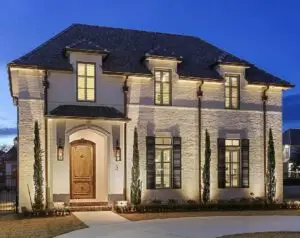
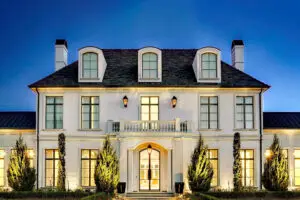
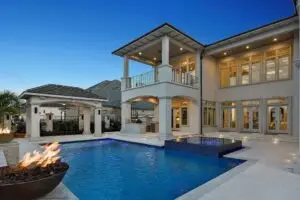
Building a luxury custom home in the Gulf South requires more than great taste, quality finishes, and a beautiful set of plans. This region brings a level of complexity that demands deeper coordination from the very beginning. Flood zone requirements, elevation strategy, site drainage, unstable soil conditions, intense heat, humidity, storms, and strict code considerations all influence how a home should be designed and built.
That is where the design-build model becomes so valuable.
For luxury custom homes in Greater New Orleans, Baton Rouge, Covington, Houma, Biloxi, and across the Gulf South, design-build creates a more connected process. Instead of treating design and construction as separate worlds, it brings them together earlier so important decisions can be made with better alignment, better information, and better results.
For homeowners investing in a one-of-a-kind custom home, that matters.
What Design-Build Means
At its core, design-build is a more integrated way to approach the custom home process. Rather than first developing plans in isolation and then handing those plans to a builder to price and execute, the design-build model connects design thinking and construction planning from the start.
That integration matters because custom home projects are filled with decisions that affect one another. Architectural ideas affect engineering. Site conditions affect foundation strategy. Material selections affect budget, schedule, and detailing. Mechanical systems affect layout, framing, and long-term comfort. When these decisions are made in a connected process instead of a fragmented one, the project tends to move forward with greater clarity.
For the client, this usually means fewer disconnects, more informed conversations, and a smoother path from concept to completion.
Why It Matters More in the Gulf South
Design-build matters everywhere, but it matters even more in the Gulf South because this region is not a simple place to build. A luxury custom home here must be designed for local realities that can dramatically affect construction.
Flood zones and base flood elevation requirements can influence the finished floor height, stair design, site grading, and exterior appearance of the home. Soil conditions can impact the slab system, piling requirements, and structural engineering approach. Heavy rainfall and drainage concerns affect site planning and water management. Heat and humidity influence insulation, HVAC design, ventilation, and moisture control strategies. Wind exposure and coastal conditions can also shape material choices and detailing.
These are not minor issues. They are foundational issues.
In a fragmented process, some of these challenges may not fully surface until later, when changes are more expensive and disruptive. In a design-build process, these realities can be considered early, when the team still has the flexibility to solve problems intelligently and align the home around both beauty and performance.
Better Coordination Creates Better Outcomes
Luxury custom homes are not simple products. They are layered, highly detailed projects with hundreds of interdependent decisions. That is why coordination is one of the most important ingredients in a successful build.
When architecture, engineering, budgeting, selections, and construction are not aligned, the homeowner often feels the consequences. Details may have to be revised late. Costs may shift unexpectedly. Certain design elements may prove more complicated than anticipated. Trade sequencing may become less efficient. The result is often avoidable stress, avoidable cost, and avoidable disappointment.
Design-build helps reduce those problems because it encourages collaboration earlier. It allows design intent to be evaluated alongside buildability, site conditions, engineering demands, and budget priorities. It creates more room for proactive decisions instead of reactive corrections.
That kind of coordination is especially important in luxury construction, where the standard is higher and the margin for error is lower.
Design-Build Helps Protect the Vision and the Budget
One of the biggest misconceptions in custom homebuilding is that design freedom and budget discipline are opposing forces. In reality, the best projects are not the ones with the biggest ideas alone. They are the ones where vision and execution stay aligned.
That is one of the great strengths of design-build.
When construction insight is part of the process earlier, the team can better understand what elements are driving cost, where complexity is increasing, and how to preserve what matters most while building intelligently. This does not mean watering down the design. It means making smarter decisions at the right time.
Sometimes that means choosing a better structural approach. Sometimes it means rethinking a material application. Sometimes it means identifying where to invest heavily and where simplification will not diminish the overall result. The goal is not to make the home feel lesser. The goal is to make the project feel intentional, disciplined, and strong from the beginning.
For luxury homeowners, that kind of early alignment protects both the aesthetic vision and the financial experience of the project.
It Improves the Client Experience
A luxury custom home should feel exciting, not chaotic. Yet many homeowners enter the building process unsure of how decisions will be made, when selections will happen, how costs will be managed, and who is responsible for keeping everything aligned.
A strong design-build process improves that experience by creating a more guided path.
Instead of the client trying to navigate separate conversations between designers, architects, builders, engineers, and vendors, the process becomes more coordinated. Questions can be answered with more context. Decisions can be made in a better sequence. Expectations can be set more clearly. The homeowner gains a stronger sense of where the project stands and what each next step means.
This is particularly important in the luxury space, where there are more custom details, more finish decisions, more technical requirements, and more opportunities for confusion if the process is not well managed. A connected design-build approach helps reduce that confusion and replaces it with clarity and confidence.
It Supports Long-Term Performance
A luxury home is not successful simply because it photographs well. It also has to live well.
In the Gulf South, long-term performance matters tremendously. Homes must handle heat, humidity, moisture pressure, storms, and daily environmental stress. The house needs to feel comfortable, durable, efficient, and resilient over time. That requires more than attractive design. It requires thoughtful integration between architecture, engineering, construction methods, insulation, ventilation, and mechanical systems.
Design-build supports that kind of integration.
Because the process is more connected from the beginning, the team can think through how the home will function over the long run, not just how it will look when complete. Moisture management, air movement, durability, serviceability, and performance can all be considered alongside aesthetics instead of being treated as afterthoughts.
For a luxury custom home in this region, that is not a bonus. It is essential.
Conclusion
Design-build matters for luxury custom homes in the Gulf South because the homes here demand more. They demand better planning. Better coordination. Better problem-solving. Better alignment between architecture, engineering, budgeting, selections, and field execution.
In a region shaped by flood considerations, soil movement, drainage challenges, humidity, storms, and complex building requirements, the process matters just as much as the finished product. A well-executed design-build approach helps homeowners make better decisions earlier, avoid unnecessary disconnects, and create homes that are not only beautiful, but also durable, intelligent, and well suited to the realities of this environment.
For clients building in New Orleans, Baton Rouge, Covington, Houma, Biloxi, and across the Gulf South, design-build is more than a project delivery method. It is a smarter way to build a better home.