
In most of the country, choosing land for a custom home is about location, views, school districts, and price. In Louisiana, there is a more important question that has to be answered first: what will it take to keep this house high, dry, and stable for the next fifty years?
At Troyer Builders, we have walked countless lots across the Greater New Orleans area, the Northshore, and South Louisiana with families who were ready to make an offer. The lots that turn into great homes are almost always the ones where the buyer did their homework on flood zones, elevation, and drainage before closing. This guide walks through exactly what to investigate.
Key Takeaways
- Check the FEMA flood zone and Base Flood Elevation (BFE) before you make an offer, not after.
- Compare the BFE to the lot’s actual ground elevation. The gap determines foundation height, fill, and cost.
- Research historical flooding and where water goes when the ground is saturated.
- Order a boundary and topographic survey and have a civil engineer review drainage and grading.
- Confirm parish permitting and elevation requirements, which vary from one jurisdiction to the next.
Six Questions to Answer Before You Buy Land in Louisiana
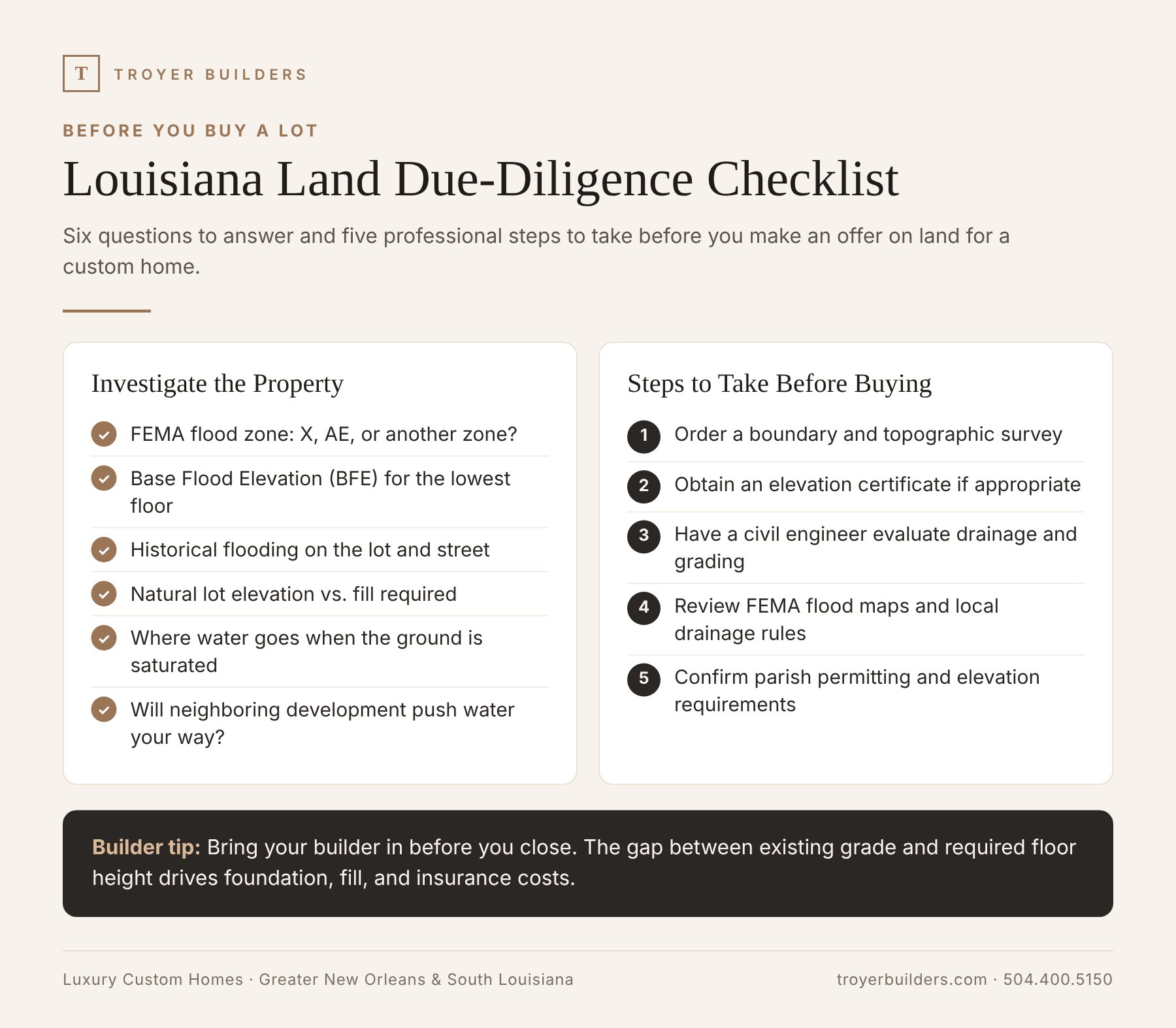
1. What FEMA flood zone is the property in?
Start with the official Flood Insurance Rate Maps on the FEMA Flood Map Service Center. Most residential lots in South Louisiana fall into Zone X (moderate to minimal risk, often because of levee protection) or Zone AE (a high-risk Special Flood Hazard Area with an established Base Flood Elevation). Coastal properties may fall into a VE zone with additional wave-action requirements.
A Zone X designation does not mean a lot is risk-free. Heavy rainfall can still flood streets and low yards in Zone X neighborhoods, which is why many of our clients choose to build above the minimum anyway.
2. What is the Base Flood Elevation?
The BFE is the height floodwater is expected to reach during a flood with a 1% chance of occurring in any given year. In flood zones, the lowest floor of the home generally must be at or above the BFE, and many parishes add freeboard, an extra margin above the BFE. We covered this in depth in The First Step in Choosing Land for a Luxury Home in New Orleans: Flood Zones and Base Flood Elevation.
3. Has the property or neighborhood flooded before?
Maps tell you about modeled risk. Neighbors tell you about real history. Ask about past events, look for high-water marks, review seller disclosures, and ask your insurance agent whether prior flood claims exist on the property.
4. Is the lot naturally high, or will you need fill?
Some lots sit on natural ridges. Others are low and will need imported fill, a raised foundation, or both. Fill adds cost and weight, and on soft Louisiana soils, it can settle over time. Knowing the lot’s existing elevation lets your builder estimate how much “lift” the home needs.
5. Where will rainwater go when the ground is saturated?
During a slow-moving tropical system, the ground stops absorbing water. Water then follows the path of least resistance. You want to know whether your lot drains toward the street, a canal, or a drainage servitude, or whether it collects water from the lots around it.
6. Will surrounding development redirect water toward your house?
A vacant lot next door today may become a raised home on fill tomorrow, sending runoff onto your property. Look at the elevations of neighboring homes and ask the parish about planned development nearby.
What We Recommend Doing Before You Close
- Order a boundary and topographic survey. This establishes property lines, easements, and spot elevations across the lot.
- Obtain an elevation certificate if appropriate. It documents how the ground and any existing structure relate to the BFE and is often needed for flood insurance.
- Have a civil engineer evaluate drainage and grading. A drainage plan designed before construction is far cheaper than fixing a wet yard later.
- Review FEMA flood maps and local drainage requirements. Some parishes require on-site detention or limit how much fill you can bring in.
- Check local permitting and elevation requirements. Orleans, Jefferson, St. Tammany, and other parishes each have their own rules, and those rules change.
How Elevation Shapes the Design and Budget
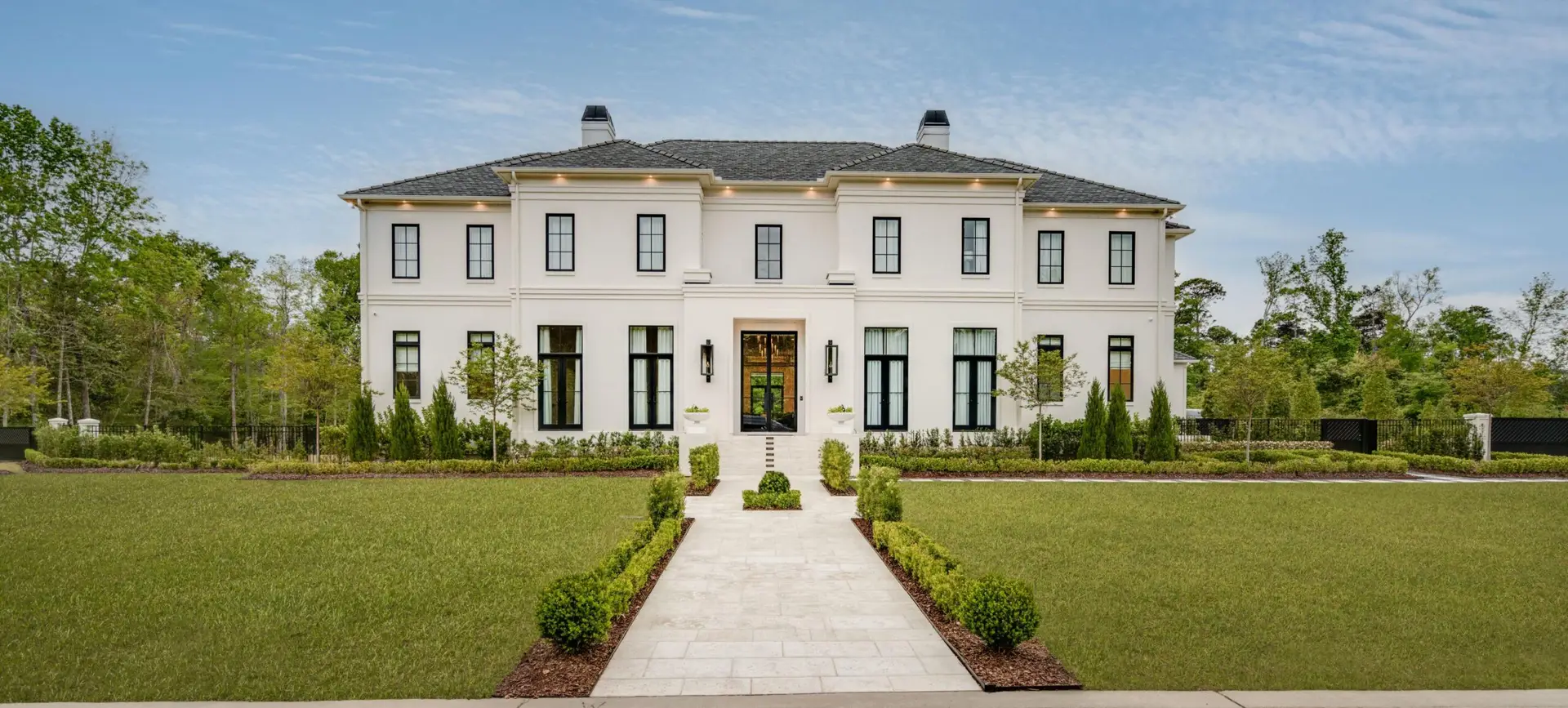
The difference between existing grade and the required finished floor height affects nearly every part of the project: the foundation system, the height of the front steps and porch, the driveway slope, garage access, accessibility, and the overall look of the home. It also affects long-term cost of ownership, because building above the BFE can meaningfully lower flood insurance premiums.
Two lots a few streets apart can carry completely different requirements. One may allow a home close to grade on an engineered slab. Another may require the living space to be raised several feet on piers or pilings. That is why we encourage clients to bring a builder into the conversation before they buy. Our planning services are built for exactly this moment.
Frequently Asked Questions
How do I find the flood zone for a lot in Louisiana?
Enter the address on the FEMA Flood Map Service Center (msc.fema.gov) or contact the parish floodplain office. Your surveyor can also confirm the flood zone and BFE on the survey.
Is Zone X safe to build in?
Zone X is lower risk than Zone AE, but it is not no-risk. Many Zone X areas in Greater New Orleans experience street flooding from heavy rain. Good drainage design and building above minimum elevation are still smart decisions.
Should I hire a builder before buying land?
Yes. A design-build team can evaluate elevation, soils, drainage, setbacks, and zoning and tell you whether the home you want is realistic on that lot and what it will cost to get there.
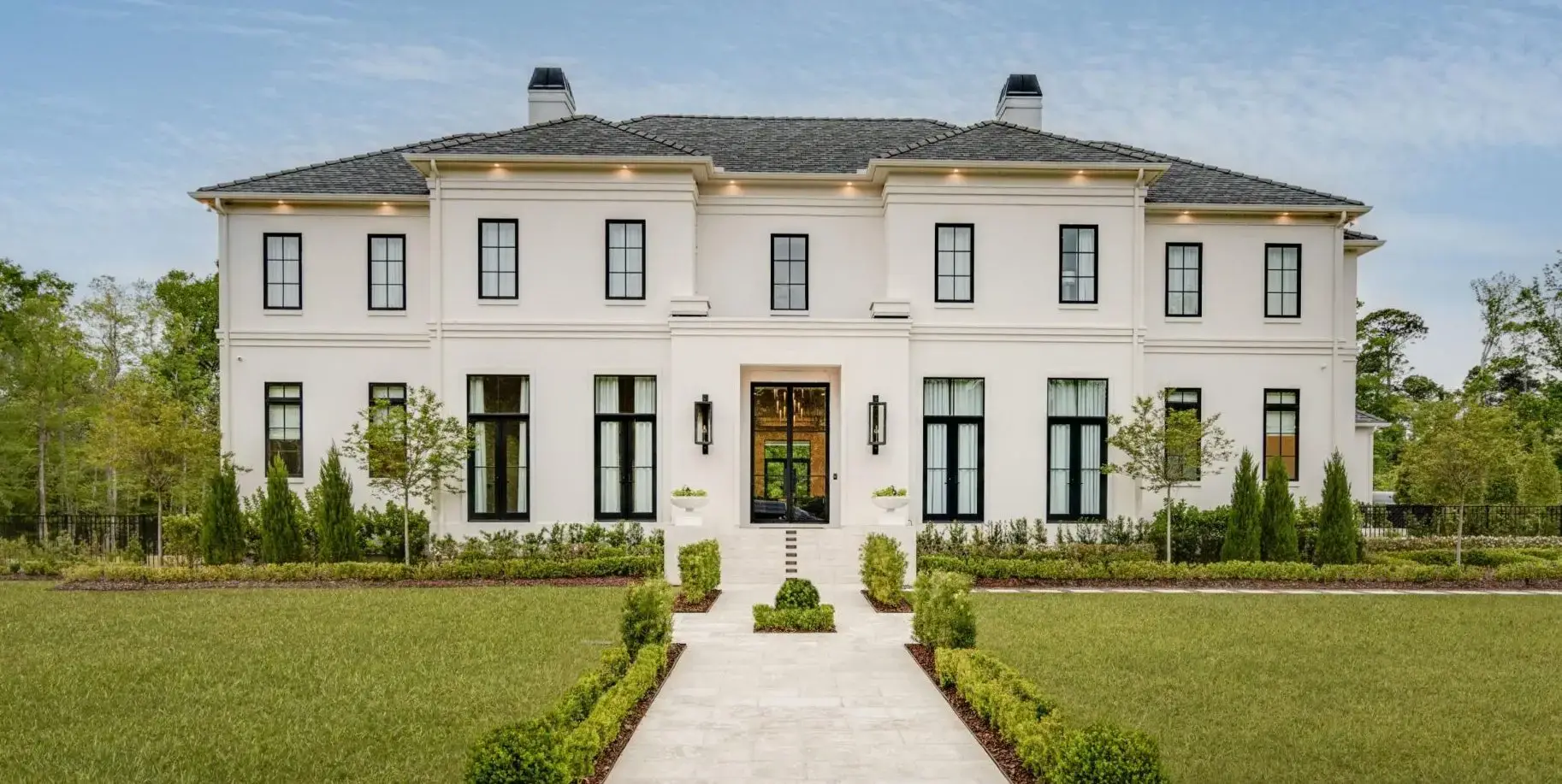
The Right Lot Makes Everything Easier
When flood zone, elevation, drainage, and permitting are understood from the beginning, the design can work with the site instead of fighting it. The result is a home that is beautiful on day one and still protecting your family decades from now.
Related Reading
- The First Step in Choosing Land for a Luxury Home in New Orleans: Flood Zones and Base Flood Elevation
- The Next Step After Choosing Your Lot: Design-Build Your Luxury Home with Troyer Builders
- Storm-Ready Luxury Homes: How Troyer Builders Prepares Louisiana Homes for Hurricane Season
Build Your Louisiana Custom Home With Troyer Builders
Troyer Builders is an award-winning luxury design-build firm serving Greater New Orleans, Metairie, the Northshore, and South Louisiana. From land evaluation and engineering through architecture, construction, and finishes, we guide every step through our Vision, Design, Create process. Explore our completed homes, meet our team, and see what homeowners say in our Google reviews.
Ready to talk about your project? Call or text us at 504.400.5150, email greg@troyerbuilders.com, or send us a message. Share your lot address, approximate square footage, and the features you have in mind, and we will help you understand what it will take to build.
Troyer Builders | 3117 18th Street, Suite 100, Metairie, LA 70002 | Get directions on Google Maps